
-
9036 Reseda Blvd #105 Northridge, Ca 91324
-
Email Address quotes@movieinsure.com
-
Phone No 1.888.959.0772
Stunt Library · Animals
Animals on Set
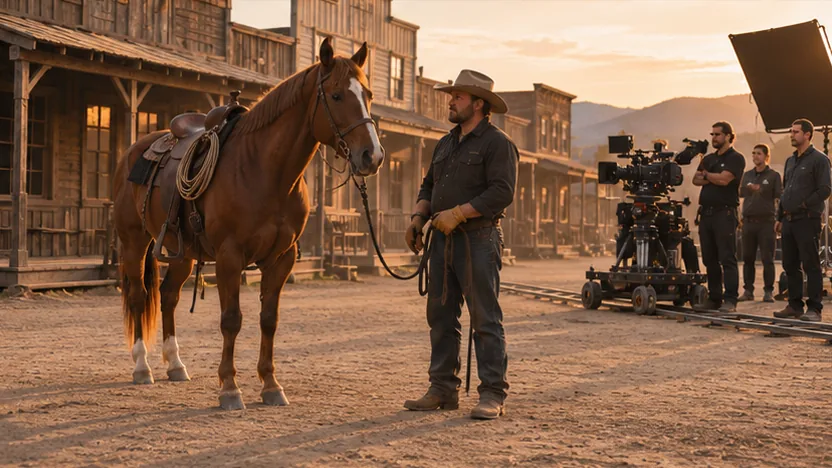
From a family dog to a horse on a western set, animals are declared like stunts. There are two separate questions: covering the scene, and covering the animal itself.
Key points
- The animal scene (liability for what the animal might do) is declared as a stunt scene.
- The animal itself can be insured separately, by its value.
- Most dog breeds are accepted. A short list of breeds is not.
- Horses and wild animals can’t share a policy with workers’ comp; pets, farm animals (not horses), caged zoo animals and wild birds usually can.
- Some animals can’t be insured at all. See Can't Be Insured vs. Needs Its Own Policy.
The scene vs. the animalTypes of animalsWhat underwriters want to knowWhat you'll need on setReal-world examplesWhat a declaration looks likeGood to knowCommon mistakesVideoFAQ
The scene vs. the animal
The animal scene
Covers liability if the animal injures someone or damages property during the shoot. Declared per scene, by type of animal.
The animal itself
Covers the animal’s value if it is hurt or dies. Common for horses, trained animals and exotic animals.
Types of animals
Dogs
Most breeds are accepted. A short list of breeds is refused; tell us the breed and we’ll confirm.
Pets
Cats, small pets and fish.
Horses
Riding, wagons and horses in the background. Always with a wrangler.
Farm animals
Cows, goats, chickens and other livestock.
Birds
Trained birds and wild birds.
Zoo and wild animals
Caged zoo animals, and wild animals including big cats, with specialist handlers.
What underwriters want to know
- The animal. Species, breed (for dogs), and how many.
- The action. Sitting on a mark, running, being ridden, interacting with actors.
- The handler. Professional trainer or wrangler, and their experience.
- Caged or free. Especially for zoo and wild animals.
- The animal’s value. If you want the animal itself covered.
What you'll need on set
A professional handler
Trainer or wrangler for every animal.
A quiet, controlled set
Limited crew near the animal, and a calm space to rest.
Barriers for large or wild animals
Plus a plan for if an animal gets loose.
Water, shade and breaks
Animal welfare is part of safety.
Real-world examples
The family dog
A trained dog sits on a couch in a living-room scene. That is a dog scene: tell us the breed, and bring the trainer.
The western
Horses are ridden down a main street and tied to a rail. Horse scenes, with wranglers, and the horses themselves can be insured by value.
The exotic animal
A trained big cat appears in a scene. Expect a close review: who handles it, whether it is caged, and the barrier plan.
What a declaration looks like
An example of the details to send for one stunt scene (made up for illustration):
| Scene | 7: ranch morning |
|---|---|
| Stunt | Two horses ridden at a walk, one dog crossing frame |
| Category | Animals: horses and dogs |
| Animals | 2 horses, 1 dog (breed confirmed) |
| Dates | Shoot day 4 |
| Safety | Professional wrangler and dog trainer, quiet set, water and shade, animal value listed for the horses |
Good to know
Animal welfare
Many productions follow animal-welfare guidelines and have a monitor on set.
Crew pets
A crew member's dog appearing in a shot is still an animal scene.
Allergies
Ask cast about animal allergies before the shoot day.
Common mistakes
Forgetting the dog’s breed
Breed matters for dogs. Tell us before booking.
Assuming the scene covers the animal
Insuring the animal itself is a separate item.
No handler
Every animal needs a professional handler on set.
Horses on the workers’ comp policy
They can’t share a policy. Tell us both and we’ll help.
Watch: Animals: The Scene vs. the Animal
Gaff explains the difference between covering an animal scene and insuring the animal itself.
Common questions
Do animals on set need to be declared?
Yes. Animal scenes are declared like stunts, by the type of animal.
Is the animal itself covered?
Not automatically. The animal can be insured separately, by its value.
Are all dog breeds accepted?
Most are. A short list of breeds is refused. Tell us the breed and we’ll confirm before you book.
Can animal scenes share a policy with workers’ comp?
Pets, allowed dogs, farm animals (not horses), caged zoo animals and wild birds usually can. Horses and wild animals cannot.
Are any animals not insurable?
Yes, including venomous snakes, sharks, jellyfish and piranha. Sea mammals are only covered when filmed from land.
Is a dog in the background an animal scene?
Yes, if the animal appears in the scene, tell us.
How do I know if a breed is accepted?
Tell us the breed before booking and we will confirm.
Can the animal itself be covered?
Yes. The animal can be insured separately, based on its value.
Ready to add your stunts?
Our team at MovieInsure places stunt coverage for productions of every size: short shoots, annual policies and features. Tell us what the stunt is and when you shoot, and we'll tell you what's needed.
Or call 1.888.959.0772 · quotes@movieinsure.com

More from the Stunt Library
Can't Be Insured vs. Needs Its Own PolicyHow Stunt Insurance WorksStunts & Workers' CompWater Scenes & BoatsBefore Stunt Day: ChecklistStunts by Program
StuntInsure.com is an educational site from MovieInsure.com, Inc., a licensed insurance agency (California License No. 0I32322). Coverage depends on the program, the policy and underwriting approval; this page explains how it usually works and is not a promise of coverage.